
Designing Cities and Transit for Seniors
Active Living For All Ages: Creating Neighborhoods Around Transit from Streetfilms on Vimeo.
The AARP Public Policy Institute (AARPPPI) is studying how seniors get from one destination to another. Do they walk, do they ride public transportation, can they travel independently, how far away do they live from their destinations and how long does it take them to get there?
AARPPPI partnered with Streetfilms to highlight work that is being done in Arlington, Virginia to create a more walkable, accessible community where you can spend the entirety of your life. AARPPPI says that when you are “planning for older adults, you’re planning for an entire community.”
Planners and policy makers in Arlington have tried to create residential and commercial development that is oriented around access to public transportation (also knows as Transit Oriented Development) and to incorporate urban design improvements that address issues important to seniors including smooth and connected sidewalks, perceptions of safety at public transit stations and bus stops, and the connectivity of and distances between the residential and commercial neighborhoods.
AARPPPI found that Arlington seniors (75 in older) make 22% of their trips on foot and that their number of trips taken on public transportation was four times higher than seniors living in other suburban communities. They also found that when public transportation wasn’t accessible, seniors didn’t use it. This conclusion may seem obvious, but it is still important to acknowledge and is always helpful to think about when making policy, planning and design decisions that impact our communities.
Who Manages Our City Streets?
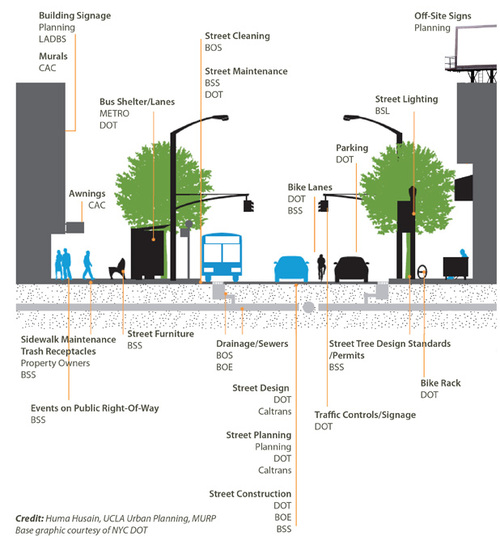
Graphic depicting governance of our city streets. Graphic by Huma Husain via LA Curbed

At some point, you may have found yourself wondering why it can take so long to get a seemingly simple repair, amenity (bicycle racks, benches, bus shelters, etc) or design change made to our city streets. Huma Husain, a graduate planning student at the University of California Los Angeles created this wonderful diagram which could provide a very helpful answer to that exact question.
As you can see, Ms. Husain has labeled the Los Angeles city managing agency which oversees different portions of our streets, sidewalks and amenities. While each city has differing managing bodies and management roles, here in Los Angeles, as this diagram illustrates, any change could be a difficult process and large-scale changes (like design modifications that can help our streets become more friendly to bicycles and pedestrians) could be very challenging.
In addition to working with the number of managing agencies involved in street projects, our underground infrastructure (pipes, tubes, wiring, etc, which provides us with our utilities and services) as well as the time and labor needed for these projects can create further delays.
But understanding how our streets are managed is important because it also let’s you know which agency should be held accountable when change needs to take place.
Pedestrian Safety in West Hollywood
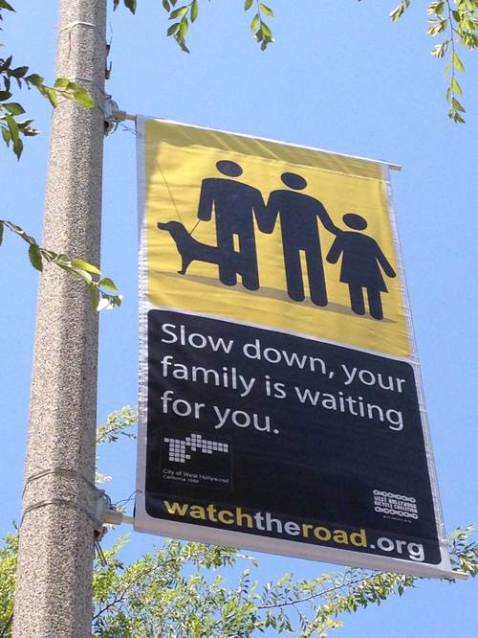
Pedestrian safety ads in West Hollywood, CA feature a same-sex family. Photo via Curbed LA

The Los Angeles region has a new safety campaign called “Watch the Road” which encourages drivers and pedestrians to be aware of one another at all times.
The City of West Hollywood has a large gay community and one of the Watch the Road campaign ads feature a same-sex family, acknowledging and including a diversity of families in their campaign. Inclusiveness can foster a sense of civic pride and participation and by the city acknowledging the diversity of their community, the city is encouraging a feeling of inclusiveness.
The Painted Laborers of Beverly Hills
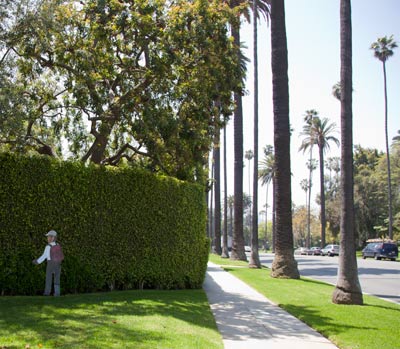
A painted laborer along Sunset Blvd in Beverly Hills by Romiro Gomez. Photo by Jorge Rivas via Colorlines

Artist Ramiro Gomez wants to draw attention to what he and other advocates consider an invisible population – the labor force that takes care of our families and homes.
A recent UCLA study found that a vast majority of home health care workers, child care workers and housekeepers in Los Angeles County were working overtime for no compensation and that 35% of maids and housekeepers and 75% of child care workers were being paid below the minimum wage.
Gomez says he wants to create a conversation and engage people who pass by wondering if the cutout is real or not and “hopefully bring more recognition where recognition is definitely deserved”.
Bronx Teens Win Fight for Safer Streets
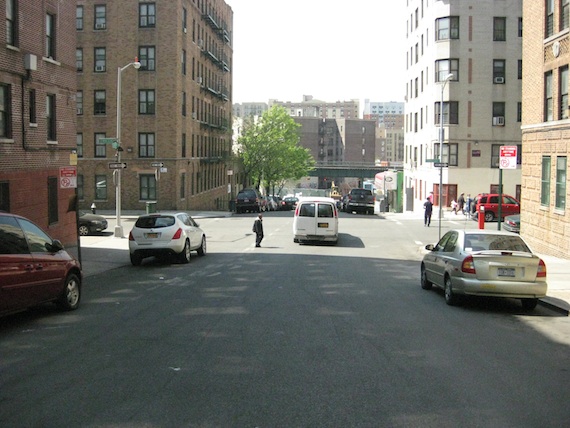
E. 172nd Street and Townsend Avenue. Photo by the Bronx Helpers via Streetsblog
%20%2F%2F%20The%20Accessible%20City "Pin It")
A New York-based group of teenagers called the Bronx Helpers who work to enhance the quality of life in their community have recently successfully lobbied the City of New York to improve the safety of E 172nd Street and Townsend Avenue by removing some parking spaces near the intersection to increase visibility of pedestrians and vehicles. The Bronx Helpers convinced the city of the necessary safety improvements after three years of advocacy.
After the city rejected a plea from the Bronx Helpers for a stop sign at the dangerous intersection (for which the activists had collected over 1,000 signatures of support), they convinced city officials to come and tour the neighborhood in hopes of finding another solution. This tour convinced the city that something should be done.
Congratulations to this passionate group of activists who worked hard to make their voices be heard and in doing so, succeeded in improving the safety of their neighborhood.

 THE ACCESSIBLE CITY