
The Umbrellas of Águeda
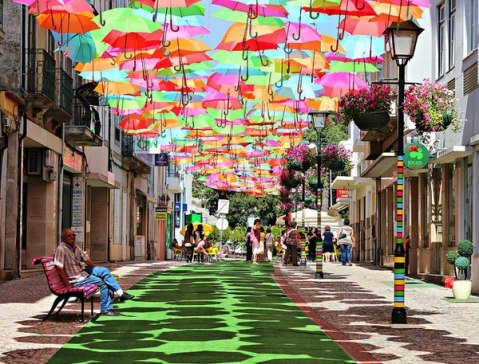
A colorful canopy of umbrellas, a part of the Agitagueda art festival in Águeda, Portugal. Photo by Patrícia Almeida

At this year’s Agitagueda art festival in Águeda, Portugal, the city council commissioned a canopy of colorful umbrellas to hang over one of the city streets. Photographer Patrícia Almeida says “I felt like a kid, amazed by all that color!”
Not only do these beautiful umbrellas add a sense of playfulness to this street but they add a ton of shade, making strolling down this pedestrian street on a warm day a much more comfortable experience.
Public art can create a destination, a gathering place, a refuge, inspiration and a sense of civic pride and it’s wonderful to see local government supporting and encouraging such dynamic public art projects like this one.
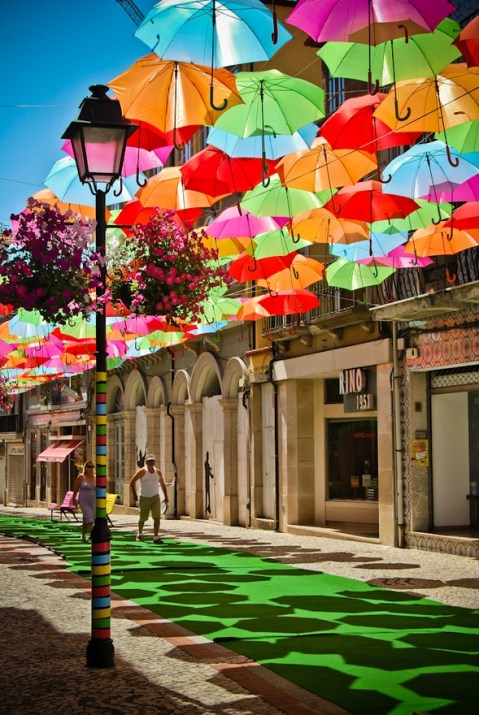
A colorful canopy of umbrellas, a part of the Agitagueda art festival in Águeda, Portugal. Photo by Patrícia Almeida

Beach Party on Eagle Street
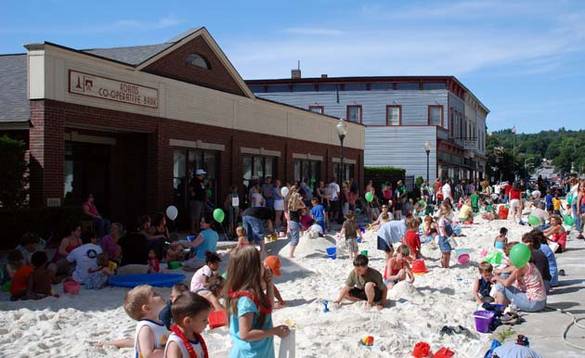
Eagle Street Beach Party and Fiesta. Photo by iBerkshires.
%20%2F%2F%20The%20Accessible%20City "Pin It")
The Eagle Street Beach Party, a free event which started in 1999, is organized by the North Adams Office of Tourism and Cultural Development. Local vendors give away prizes for creative sand castles an sculptures, and food and music cap the day.
The Skateboarding Girls of Kabul
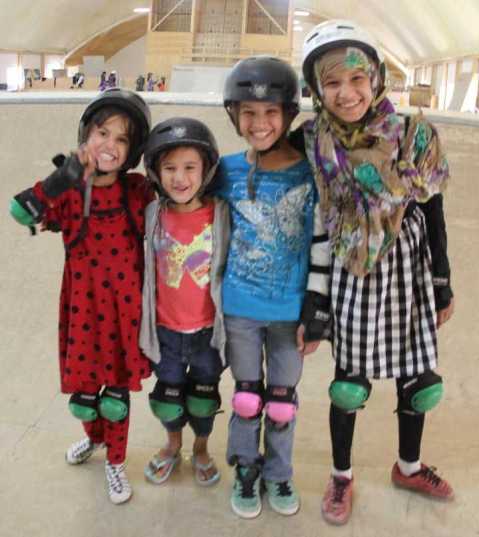
Skateistan students Tamima, Fatima, Gulmina, and Suhaila. Photo via Skateistan

Get ready. A skateboarding revolution is happening amongst young girls… in Afghanistan.
In 2009, Skateistan (an NGO and Afghanistan’s first skateboarding school) opened the doors to it’s 5428 square meter facility in Kabul, providing recreational sports and education and creative arts classes to boys and girls ages 5-17. According to Skateistan, 60% of Afghanistan’s population is under 25 and 50% is under the age of 17. Children without education (an especially girls – only 12% of Afghan women are literate) have few opportunities open to them. Skateistan aims to provide children with a safe place for education and recreation and hopes to instill each one of their students with confidence, team work and leadership skills, to help them become empowered individuals who affect change in their community.
Each week, Skateistan welcomes over 400 children, half of who are children streetworking children, some are refugees, some are disabled and 40% of all the children are girls. To help make the facility more accessible, Skateistan provides transportation to and from the facility (women and girls are usually not allowed to travel alone and getting around Kabul can be difficult with traffic congestion, limited public transportation and street harassment) as well as skateboards, other sports equipment, safety gear and educational materials.
Afghanistan’s Girl Skaters – Kabul 2012 from Skateistan on Vimeo.
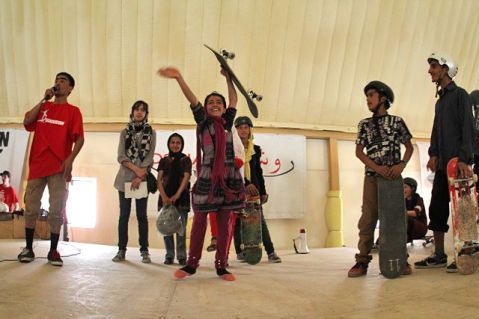
Tamana, 11 wins 1st place in the girl’s skateboarding contest. Photo via Skateistan

Crosswalk Performance Art in Paris
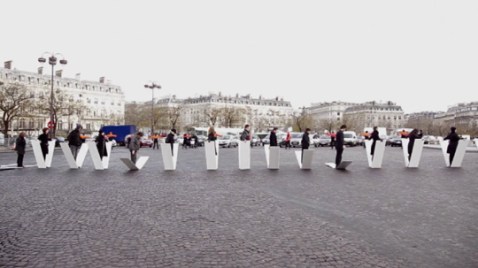
Pop Up Crosswalk by X/TNT in Paris, France. Photo via Pop Up City

French theater group X/TNT wanted to raise awareness about the dangerous conditions that exist for pedestrians at La Place de L’Etoile (the roundabout under the Arc de Triomphe) in Paris. Check out their performance, creating a temporary street level crossing (the city prefers pedestrians access the Arc via an underground pedestrian tunnel) to get from one side of the street to another.
STRESS FREE – La prise de l’étoile – Pedestrian crosswalk from Xtnt – Urban Theater on Vimeo.
Beneath the High Line
Today, the New York Times had a great opinion piece by Jeremiah Moss titled Disney World on the Hudson: In the Shadows of the High Line.
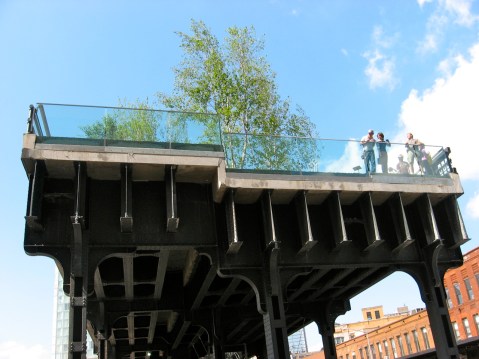
The High Line. Photo by Anna Peccianti
%20%2F%2F%20The%20Accessible%20City "Pin It")
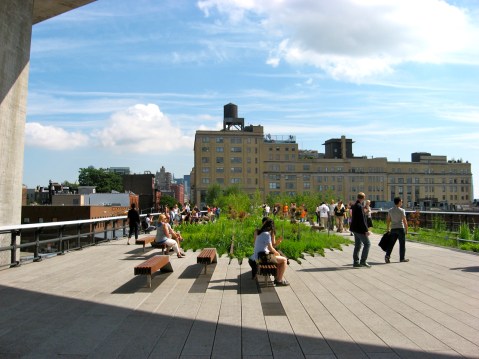
The High Line. Photo by Anna Peccianti
%20%2F%2F%20The%20Accessible%20City "Pin It")
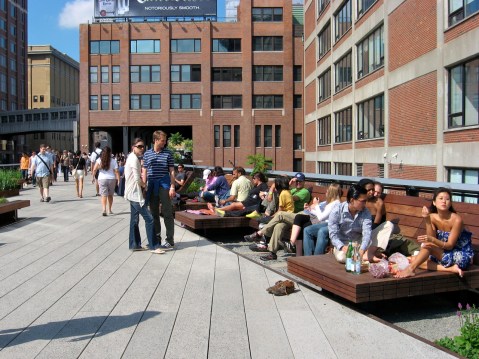
The High Line. Photo by Anna Peccianti
%20%2F%2F%20The%20Accessible%20City "Pin It")
For me, the High Line is an innovative and unique reuse project, but one that also embodies exclusivity. The 1.45-mile-long park is located in a mostly swanky area of Manhattan, surrounded by chic shops and restaurants, expensive food trucks and sits literally high above the street (which can be an issue when elevated spaces can feel unwelcoming and exclusive). The park is accessible to some visitors by mulitiple stairways and less-abled visitors (or those encumbered with strollers for example) can access the long and winding park by select elevators. But those with any impairment or any sort of carriage must be careful not to trip over raised concrete design features that surround the planted areas embedded in the concrete surface of the park.
The Friends of High Line board boasts a few high-profile celebrities who live or work near the park (the website features a history of the High Line video narrated by the actor Ethan Hawke) and had managed to create such a buzz about the space that on opening day there was a line of people wrapped around the block, waiting (after they obtained an official wrist band) to explore this new “public” space, a handful at a time.
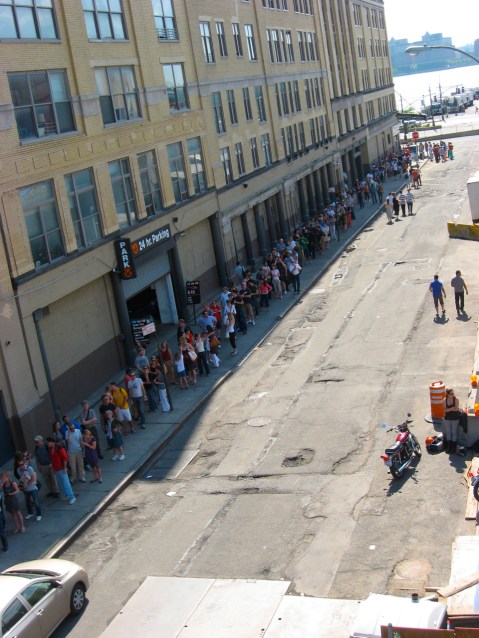
Waiting in line for the High Line on opening weekend. Photo by Anna Peccianti
%20%2F%2F%20The%20Accessible%20City "Pin It")
Many other cities around the country have looked to the High Line as a model of an innovative reuse project than can attract a lot of locals and tourists to a neighborhood but it may be important for them to take a closer look. Mr. Moss writes that the park “has become a tourist-clogged catwalk and a catalyst for some of the most rapid gentrification in the city’s history.”
As so often happens with gentrification, Mr. Moss fears that any remaining diversity of “regular New Yorkers” will soon vanish. He writes:”Within a few years, the ecosystem disrupted by the High Line will find a new equilibrium. The aquarium-like high rises will be for the elite, along with a few exclusive locals like the Standard Hotel. But the new locals will rarely be found at street level, where chain stores and tourist-friendly restaurants will cater to the crowds of passers-by and passers-through. Gone entirely will be regular New Yorkers, the people who used to call the neighborhood home. But then the High Line was never really about them.”

 THE ACCESSIBLE CITY