
VOTE
Today, I went to the polls to let my voice be heard and when I turned in my ballot, I received this incredible LA County voting sticker. Does any city’s voting sticker represent such a diverse group of languages??
Los Angeles County has such a diverse population and it’s important to remember as planners and professionals that we are sure to include a diverse group of voices in the decision-making process.
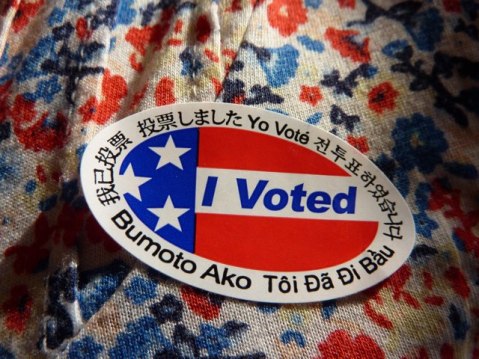
Los Angeles County voting sticker. Photo by Anna Peccianti

Measure J

Passengers waiting for the bus in Los Angeles. Photo via Experiencing Los Angeles.

In 2008, Los Angeles County voters approved Measure R, giving our Metropolitan Transit Authority (MTA) $40 billlion over the next 30 years for transportation upgrades (everything from new light rail to expanded bus service to pothole repair) within the 88 cities that make up Los Angeles County. The $40 billion is funded through a half-cent transportation sales tax increase which will cost each resident around $25 per year for the next 30 years. In 2008, not only did I vote for Measure R (along with 75% of voters) but I did so enthusiastically.
Four years later, the MTA proposed a new measure on our ballots (Measure J) which would extend the tax for an additional 30 years at the cost of $90 billion. Initially, I thought that voting for Measure J would be an obvious choice, that is until I started reading the opposition to the Measure and began to assess the cumulative impacts of Measure J – thinking regionally and locally.
I am a public transportation advocate and a passionate one at that. Some of the improvements proposed in Measure J seem like they would have a positive impact but many seem negative.The problem is that we can’t be guaranteed which projects MTA will choose (or who could suffer in unforeseen ways in the process ) to put our money towards and I’m not sure I’m willing to give Metro $90 billion to carry out initiatives of their choosing.
Beyond Zuccotti Park
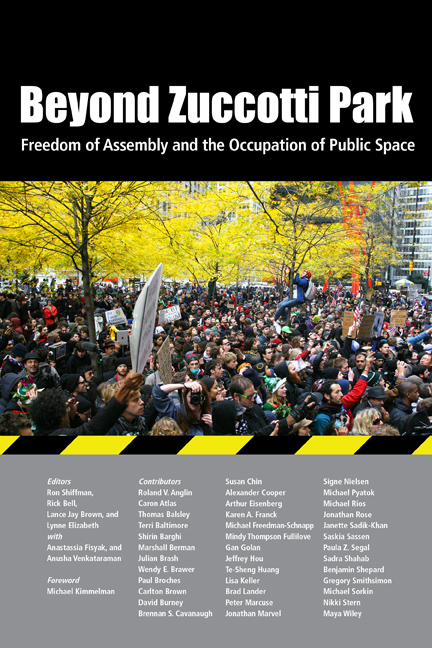
Beyond Zuccotti Park: Freedom of Assembly and the Occupation of Public Space from New Village Press

During the Occupy movement, one of the most important questions asked was who owns our public spaces and what is the role of these spaces and who is allowed (or deterred) from speaking? Beyond Zuccotti Park: Freedom of Assembly and the Occupation of Public Space is a new book that asks: Where can the public congregate and how can city planning, design, and policies support First Amendment rights to public assembly and free speech? The book features essays written by experts in social science, planning, design, civil liberties, urban affairs, and the arts that address the importance of our public spaces as forums for expression with an historic and contemporary lens.
I’m proud to say that many professors, current students and alumni of my alma mater Pratt Institute contributed to this thoughtful and important book. You can read more about the book (and it’s larger initiatives, current exhibitions, lectures and news) through Beyond Zuccotti Park’s Twitter and Facebook pages.
The Skateboarding Girls of Kabul
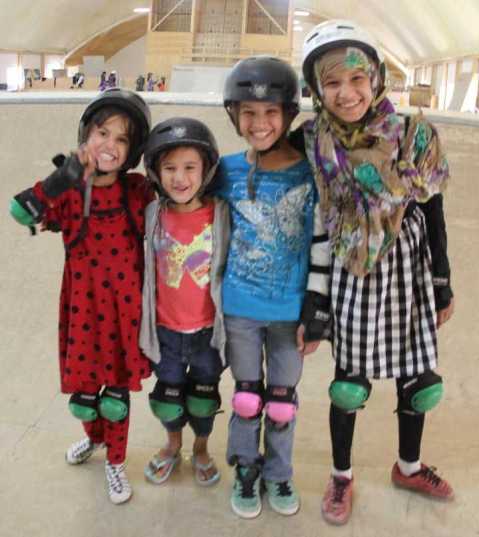
Skateistan students Tamima, Fatima, Gulmina, and Suhaila. Photo via Skateistan

Get ready. A skateboarding revolution is happening amongst young girls… in Afghanistan.
In 2009, Skateistan (an NGO and Afghanistan’s first skateboarding school) opened the doors to it’s 5428 square meter facility in Kabul, providing recreational sports and education and creative arts classes to boys and girls ages 5-17. According to Skateistan, 60% of Afghanistan’s population is under 25 and 50% is under the age of 17. Children without education (an especially girls – only 12% of Afghan women are literate) have few opportunities open to them. Skateistan aims to provide children with a safe place for education and recreation and hopes to instill each one of their students with confidence, team work and leadership skills, to help them become empowered individuals who affect change in their community.
Each week, Skateistan welcomes over 400 children, half of who are children streetworking children, some are refugees, some are disabled and 40% of all the children are girls. To help make the facility more accessible, Skateistan provides transportation to and from the facility (women and girls are usually not allowed to travel alone and getting around Kabul can be difficult with traffic congestion, limited public transportation and street harassment) as well as skateboards, other sports equipment, safety gear and educational materials.
Afghanistan’s Girl Skaters – Kabul 2012 from Skateistan on Vimeo.
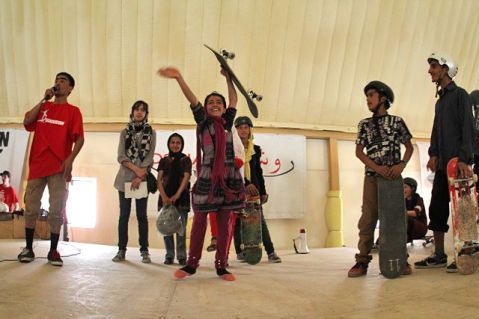
Tamana, 11 wins 1st place in the girl’s skateboarding contest. Photo via Skateistan

Crosswalk Performance Art in Paris
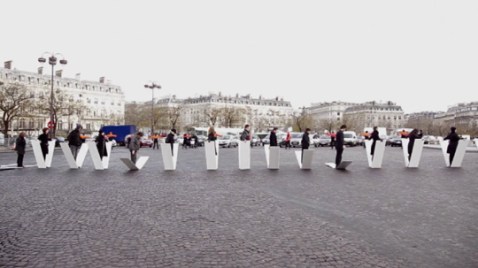
Pop Up Crosswalk by X/TNT in Paris, France. Photo via Pop Up City

French theater group X/TNT wanted to raise awareness about the dangerous conditions that exist for pedestrians at La Place de L’Etoile (the roundabout under the Arc de Triomphe) in Paris. Check out their performance, creating a temporary street level crossing (the city prefers pedestrians access the Arc via an underground pedestrian tunnel) to get from one side of the street to another.
STRESS FREE – La prise de l’étoile – Pedestrian crosswalk from Xtnt – Urban Theater on Vimeo.

 THE ACCESSIBLE CITY